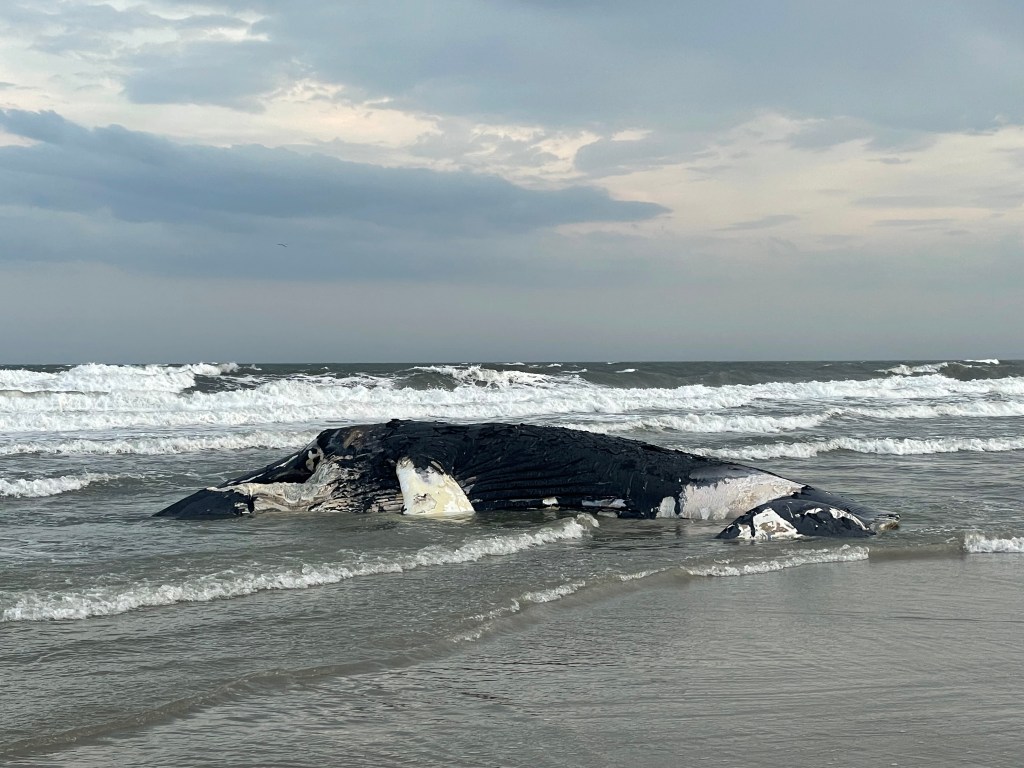
Little did I know that on one of the coldest days we decided to take a walk on the beach in Far Rockaways, we would come across the body of a baby humpback whale.
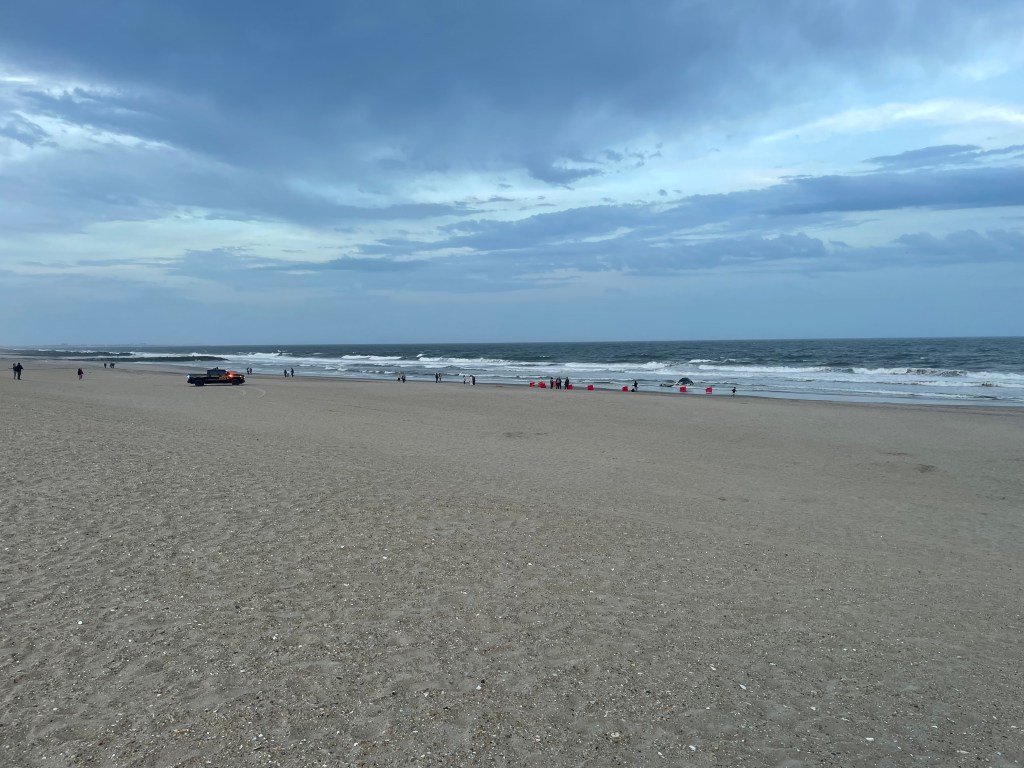
When we stumbled upon him, the New York state troopers were already on the watch. One of them said that the whale was spotted near New Jersy shore and was drifting for at least a day.
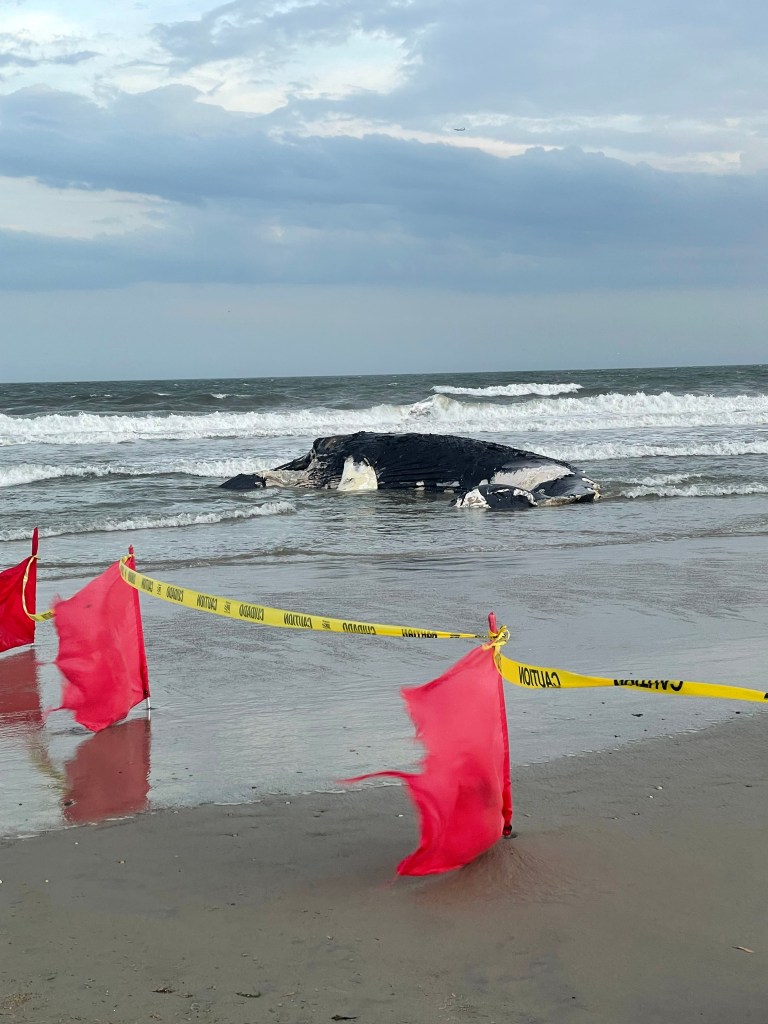
Based on the information I could find in the news, it was likely that he was struck by a boat, but there is no official confirmation of this event. His body was partially decomposing, with visible shark bites.

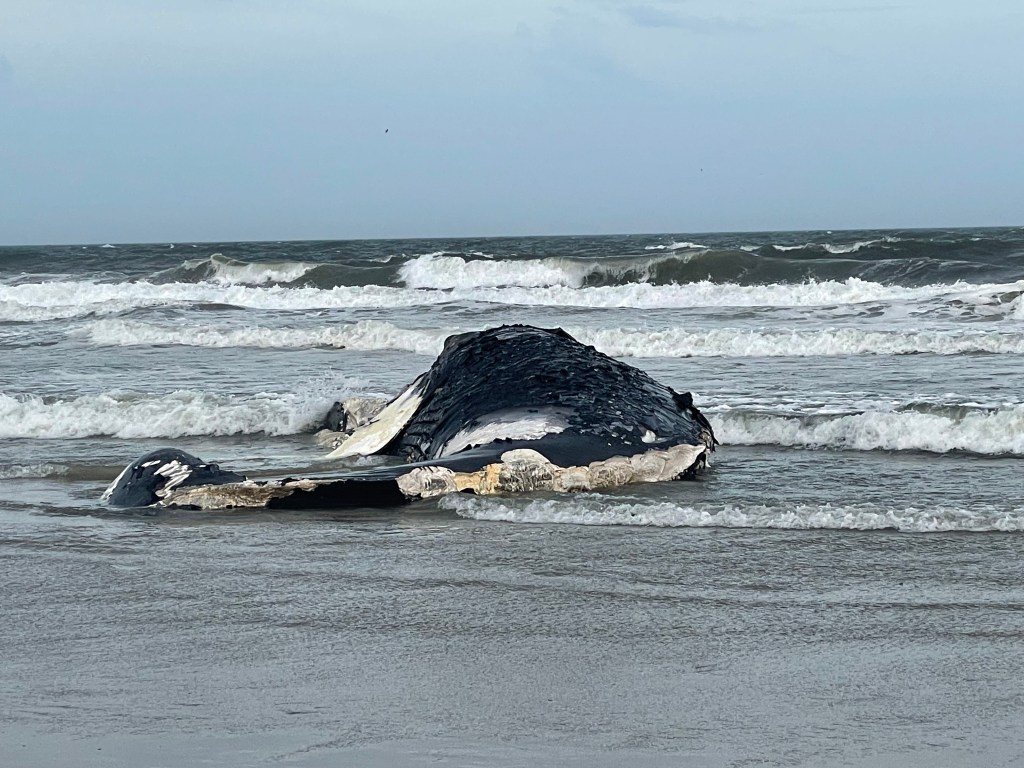


I have been whale watching several times over the years, yet I have never seen a carcass. The lifeless body of this majestic animal filled me with sadness.
Whales are one of the most fascinating mammals living on this planet. Their flippers are the common textbook example of homologous structure, often shown next to a bat wing and a human hand. They are also some of the longest-lived mammals, reaching 80-90s, if not longer. Shockingly, whales can hold their breath for up to 1 hour. For comparison, a human Guiness World record is 24 minutes 37.36 seconds, held by a professional diver with 100% oxygen supplementation. At the same time, the rest of us can maybe manage 30-90 seconds, so do not try at home.
Seeing him, one thing remains clear: we need to learn more about how to protect them from boat strikes.
One of the hypotheses for the boat strikes is due to increased noise related to water traffic. Even though whales are exceptionally smart and clever, they rely on echolocation, which allows localization of objects by reflected sounds. Since the sound travels faster in water than in the air, whales may have trouble locating the approaching danger if there is increased surrounding noise. Ouf of a sudden, the oceans became as loud as our cities, filled with traffic sounds coming from all directions, cars, bikes, scooters, and other vehicles.
Another analogy to picture this is to imagine yourself standing in a concert venue full of people. You want to say something to a friend at the end of the venue. Seems like no problem at first, you can scream and they can hear you. Still, no problem, it is only the two of you talking. Now, 100 people try to follow the task at the same time. To be heard better, each person uses a megaphone to speak, so people on the other side of the venue can hear them (that would equate to large motors used by various boats). Suddenly, even though each one of them is louder, nobody can figure out who is speaking to whom and from what location. It is very likely that whales struggle in the same way. Increased noise could make it more difficult to decipher what is in front of them, how fast it is moving, and in what direction.
While many countries try to mitigate this situation by setting speed limits in known areas of whale migration, the problem remains. Scientists have been studying general whale migration patterns for years. However, the patterns are not always the same. Whales are living creatures that take detours to find food, to avoid predation on their young, or for many other reasons. Thus, their routes should be continuously monitored and updated. Unfortunately, new routes are not always convenient for shippers. To complicate it a bit, tracking whales is a difficult task, as they dive deeply into the ocean, and the signal cannot be monitored by satellites at all times. You can track and follow some of them here.
Countries around the world work hard to slow down boats to protect whales, but compliance is necessary for success. Creative solutions are needed to lower the boat traffic noise and increase boat visibility to the whales. I hope countries around the world will continue to support those kinds of efforts, as whales have no passports and do not belong to one nation.
Whales evolved over 50 million years ago and have existed for about 10 times longer than us, yet rapid industrialization in the past 150 years has given them no time to adjust. We have to be that change for them to survive. We must do better for these animals, as they deserve safer oceans.
To learn about East Coast traffic and regulations see NOAA Fisheries website.
 Marta Grońska-Pęski
Leave a comment